
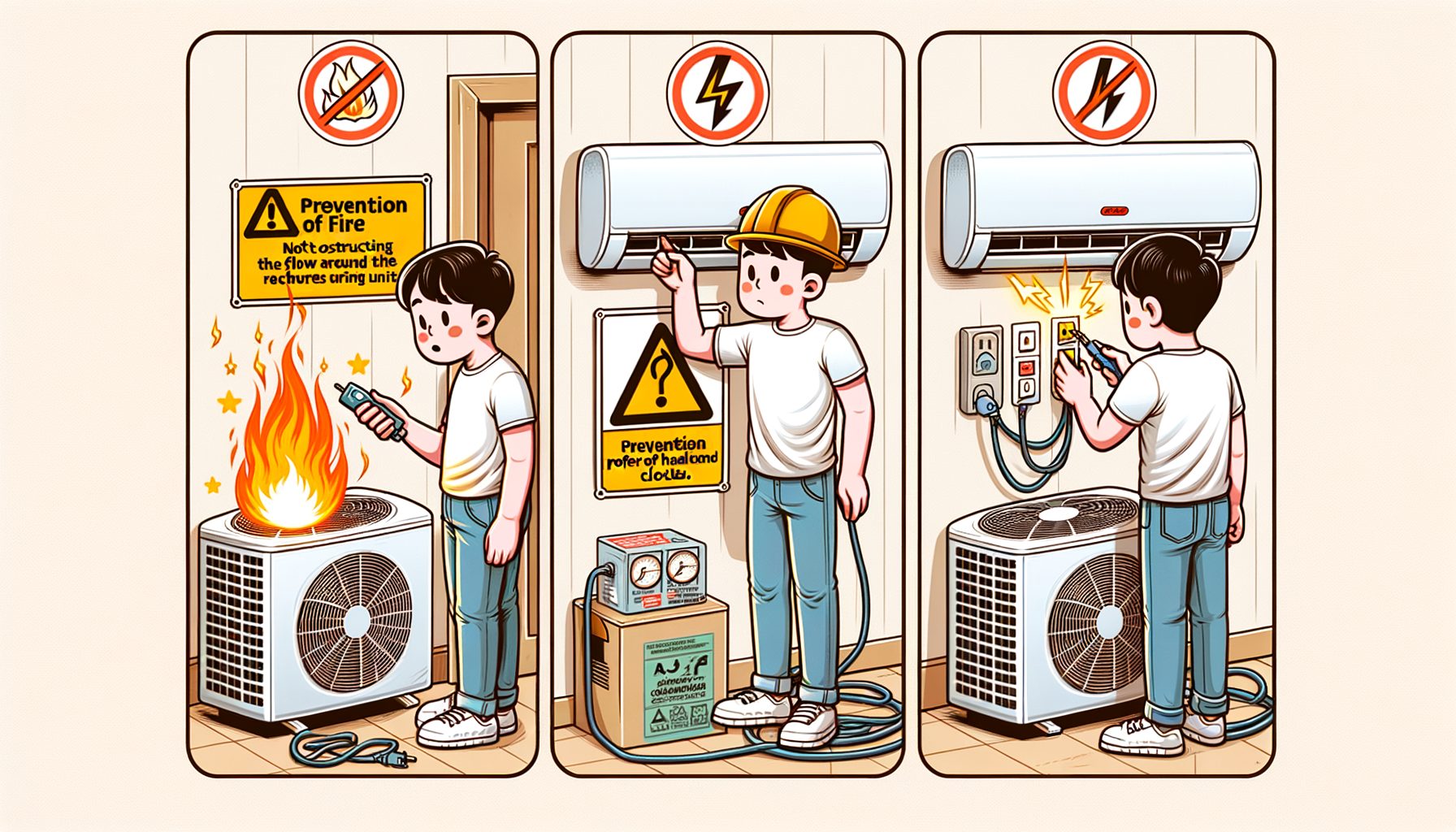
Your air conditioner keeps you cool, but it can also create hidden risks: electrical fires, shock hazards, and messy water leaks. If you’ve ever wondered whether your AC setup is truly safe, you’re not alone. Here’s a practical set of Air Conditioner Safety Tips to help you prevent fires, shocks, and leaks—without needing to be a technician. Read on for clear steps you can apply today, plus pro-level advice made simple.
The real risks: fires, shocks, and leaks—and why they happen
Most AC incidents are preventable. The core problems usually come down to three things: electrical strain, blocked airflow, and poor moisture management. When a unit draws more power than a circuit can safely deliver—often because of undersized wiring, loose connections, or plugging into low-quality adapters—heat can build up. That heat can damage insulation and start a fire. Loose plugs that spark, worn cords, and overloaded multi-plug adapters are classic red flags. Organizations like the Electrical Safety Foundation International (ESFI) and the National Fire Protection Association (NFPA) consistently warn that improper wiring, aging outlets, and overcurrent protection mistakes are major contributors to home electrical fires. See ESFI’s electrical safety primers for context: https://www.esfi.org/resource/air-conditioner-safety/ and https://www.esfi.org/resource/ground-fault-circuit-interrupters-gfci/
Shocks typically happen when moisture meets electricity or when grounding is missing or defeated (for example, using a two-prong adapter for a three-prong plug). Shock risk is cut dramatically by ground-fault circuit interrupters (GFCIs/RCDs), which shut power off the moment a fault to ground is detected. In some regions, arc-fault circuit interrupters (AFCIs) are also used to reduce fire risk from arcing. Your local electrical code should be followed at all times (for example, NFPA 70/NEC in the United States: https://www.nfpa.org/codes-and-standards).
Leaks matter just as much. Air conditioners remove moisture from the air and drain it through a condensate line or a pan. If that drain clogs with dust or biofilm, water backs up and spills indoors, causing stains, mold, or ceiling damage. Poor insulation on the refrigerant line can also cause condensation and drips. Refrigerant leaks, while less common when systems are installed correctly, reduce cooling performance and can be harmful to the environment; only certified technicians should handle refrigerants (see the U.S. EPA Section 608 program: https://www.epa.gov/section608).
Heat waves, long runtime, and neglected filters multiply all these risks. As your AC works harder, wiring and motors run hotter—and more condensate can be produced. The good news: a few preventive steps sharply reduce the chances of fire, shock, or leaks while helping your system run more efficiently and last longer.
Power and placement: set up your AC to be electrically safe
Safe power starts at the outlet. Window and portable AC units should be plugged directly into a dedicated, properly grounded wall receptacle—never into a basic power strip, extension cord, or multi-plug adapter. Those devices can overheat under the high startup current AC compressors draw. If surge protection is desired, a licensed electrician can recommend a whole-home surge protective device (SPD) at your main panel or a properly rated, manufacturer-approved solution; cheap strips not designed for motor loads should be avoided. Learn more about GFCI/RCD protection from ESFI: https://www.esfi.org/resource/ground-fault-circuit-interrupters-gfci/
Match the circuit to the unit. Check the AC’s nameplate for voltage and amperage, and verify the circuit breaker and wiring are sized accordingly. A breaker that trips repeatedly is not “just sensitive”—it’s a safety signal. Do not upsize a breaker to stop nuisance trips; that masks a hazard. Instead, have an electrician check for loose connections, damaged cords, or undersized wiring. Following your local code (such as NFPA 70/NEC in the U.S.) ensures grounding, conductor size, and overcurrent protection are correct: https://www.nfpa.org/codes-and-standards.
Placement reduces both fire and leak risks. Keep at least the manufacturer’s recommended clearance (often 30–60 cm) around indoor and outdoor components so they can breathe. When vents are blocked, the compressor and fan are forced to run hot. Don’t drape curtains, clothes, or decor over the unit. Keep cords straight and fully inserted; a half-seated plug can arc and char the outlet. For split systems, ensure the outdoor unit sits level on a stable base, above standing water, with vegetation trimmed back. For portable ACs, route the exhaust hose with minimal kinks and seal window gaps to prevent hot, humid air from re-entering the room.
Grounding and protection deserve a quick test, too. Make sure three-prong plugs are intact; don’t defeat the ground pin. Where required, use GFCI/RCD-protected outlets, especially in damp areas. These devices should be tested monthly using the “TEST/RESET” buttons. With correct grounding and functioning protection devices, shock and fire risk is reduced significantly, and code and warranty terms are maintained.
Maintenance that prevents leaks and overheating
Routine maintenance is your best defense against leaks and overheating. Start with the filter: a clogged filter chokes airflow, making the evaporator coil too cold and sometimes causing ice. As the ice melts, water overflows. Check filters monthly during heavy use; clean or replace them per the manufacturer’s guidance (commonly every 1–3 months). In central systems, ensure you use the correct size and MERV rating so the blower isn’t overworked.
Keep coils clean. Dust and grease on the evaporator (indoor) or condenser (outdoor) coils act like a blanket, trapping heat and forcing the compressor to run longer and hotter. Once or twice a year, gently clean the coils using a soft brush or a coil-safe cleaner. Be careful not to bend the fins. Leaves, lint, and debris around outdoor units should be cleared, and the recommended space around them maintained for proper airflow.
Flush the condensate drain. Pouring warm water or a mild solution such as distilled vinegar down the drain line can help dissolve biofilm. Chemicals should never be mixed. If the line is accessible, a wet/dry vacuum at the outside drain can pull out clogs. Look for a float switch on or near the drain pan; it’s designed to shut the unit off before water spills. If your system doesn’t have one, ask a technician to install it. Also check insulation on the cold suction line; damaged insulation can cause sweating and dripping.
Watch for refrigerant issues. You might notice longer cooling times, hissing near the coil, or oily residue on connections. Only certified professionals should test, repair, and recharge refrigerant circuits because of environmental and safety regulations (see EPA Section 608 rules: https://www.epa.gov/section608). If you suspect a leak, switch off the system and call a pro.
A quick maintenance planner keeps you on track:
| Task | Recommended Frequency | Time Needed | What It Prevents |
|---|---|---|---|
| Check/clean or replace air filter | Monthly in season (or per manual) | 5–10 minutes | Overheating, icing, high bills |
| Clear debris around outdoor unit | Monthly | 10 minutes | Poor airflow, motor stress |
| Flush condensate drain | Every 1–3 months | 10–15 minutes | Water leaks, moldy odors |
| Coil cleaning (light) | 1–2 times per year | 30–60 minutes | Overheating, low efficiency |
| Pro inspection and service | Annually (before peak season) | 60–90 minutes | Early failure, hidden hazards |
Consistent upkeep keeps temperatures, moisture, and pressure in the safe zone. Energy use drops, and the system’s lifespan is often extended—win, win, win.
Warning signs, quick fixes, and when to call a pro
Some signals say “stop—check now.” If you smell burning, see smoke, or hear buzzing or sizzling from the outlet or unit, shut it off at the thermostat and the breaker. Do not repeatedly reset a tripping breaker; that’s a safety device telling you something’s wrong. If you feel tingling when touching the unit or notice scorch marks around an outlet, call an electrician immediately. For reference, the Consumer Product Safety Commission’s guidance on home electrical safety is solid: https://www.cpsc.gov/Safety-Education/Safety-Guides/Electrical
Water where it shouldn’t be is another big clue. Puddles near the indoor unit, wet ceilings below an air handler, or a musty smell often point to a clogged condensate drain. Quick, safe steps you can take: power off the system, place a tray or towels under the unit, clean or change the filter, and gently flush the drain if you know how. If water damage is active or you can’t access the drain, call a technician before turning the system back on. Ice on the refrigerant lines or evaporator coil usually indicates poor airflow or low refrigerant; let the unit thaw fully (with power off) and fix the root cause.
Performance symptoms also matter. Warm air from the vents, short cycling (turning on and off quickly), unusually high energy bills, or strange rattles and grinding noises suggest maintenance or repairs are needed. For window or portable ACs, check that the exhaust hose is sealed and the unit is level so water drains correctly. For splits and central systems, ensure supply and return vents are open and unblocked; closing too many registers can increase static pressure and stress the blower.
Call a professional when you have repeated breaker trips, suspected refrigerant leaks (oily residue, hissing), persistent icing, electrical odors, shock tingles, or ongoing water damage. When booking service, ask for: licensed/insured status, refrigerant certification (e.g., EPA 608 in the U.S.), an electrical safety check (current draw vs. nameplate, voltage/grounding test), a documented leak test for refrigerant issues, and photos or readings before/after. Keep receipts and register your product to receive safety notices or recalls. For general maintenance guidance, see U.S. Department of Energy tips: https://www.energy.gov/energysaver/central-air-conditioning and ASHRAE resources: https://www.ashrae.org/technical-resources
Q&A: fast answers to common AC safety questions
Q1: Is it safe to plug a window or portable AC into a power strip?
A: No. AC compressors draw high current, especially at startup. Use a dedicated, grounded wall outlet. If you want surge protection, talk to an electrician about a panel-mounted surge protective device or a properly rated solution designed for motor loads.
Q2: How often should I replace or clean my AC filter?
A: Check monthly during heavy use. Many homes need a replacement or cleaning every 1–3 months, sooner if you have pets, smoke, or dust. A clean filter protects the compressor, prevents icing and leaks, and lowers your energy bill.
Q3: My breaker trips when the AC starts—what should I do?
A: Stop resetting it repeatedly. Turn off the AC, check for a clogged filter and blocked vents, then call a qualified electrician or HVAC technician. The circuit may be undersized, wiring may be loose, or the compressor may be failing. Never install a larger breaker to “solve” trips.
Q4: Can a refrigerant leak make me sick?
A: Most modern refrigerants are not highly toxic, but they can displace oxygen in a small, unventilated space, causing dizziness or headaches. They can also be very cold and cause frostbite on contact. If you suspect a leak, ventilate the area, turn the unit off, and call a certified technician.
Conclusion: your simple plan to prevent fires, shocks, and leaks
Quick recap: most AC hazards trace back to power issues, poor airflow, or unmanaged moisture. You can minimize risk by plugging directly into a dedicated, grounded outlet; keeping filters and coils clean; flushing the condensate drain; maintaining clear airflow; and calling a certified pro when warning signs appear. These steps aren’t just “nice to do.” They lower the chance of electrical fires, reduce shock risk, and stop leaks before they ruin your floor or ceiling.
Take action today with a 10-minute safety audit: 1) Confirm your AC is plugged directly into a grounded wall outlet (no power strips or extension cords). 2) Test your GFCI/RCD if your outlet has one. 3) Check and clean or replace the air filter. 4) Verify there’s clear space around the unit and vents. 5) Look for water in the drain pan or near the unit and flush the drain if needed. 6) Walk outside and clear debris around the outdoor unit. Then, set a reminder to schedule professional service before the next heat wave.
If you rent, share this checklist with your landlord. If you own, consider logging maintenance in your calendar and registering your equipment for recall notices. Bookmark this guide, send it to a friend, and post a reminder in your group chat before the next hot spell—someone you know will avoid a headache because of you.
Smart, consistent care beats emergencies every time. Start with one small step today and build a safer, cooler home. Which item on the safety audit will you check off first?
Sources and further reading
- Electrical Safety Foundation International (ESFI) – Air Conditioner Safety: https://www.esfi.org/resource/air-conditioner-safety/
- ESFI – Ground-Fault Circuit Interrupters (GFCI): https://www.esfi.org/resource/ground-fault-circuit-interrupters-gfci/
- National Fire Protection Association (NFPA) – Codes and Standards (including NFPA 70/NEC): https://www.nfpa.org/codes-and-standards
- U.S. Department of Energy – Central Air Conditioning (maintenance tips): https://www.energy.gov/energysaver/central-air-conditioning
- U.S. Environmental Protection Agency – Section 608 Technician Certification: https://www.epa.gov/section608
- U.S. Consumer Product Safety Commission – Electrical Safety Guides: https://www.cpsc.gov/Safety-Education/Safety-Guides/Electrical
- ASHRAE – Technical Resources for HVAC: https://www.ashrae.org/technical-resources