
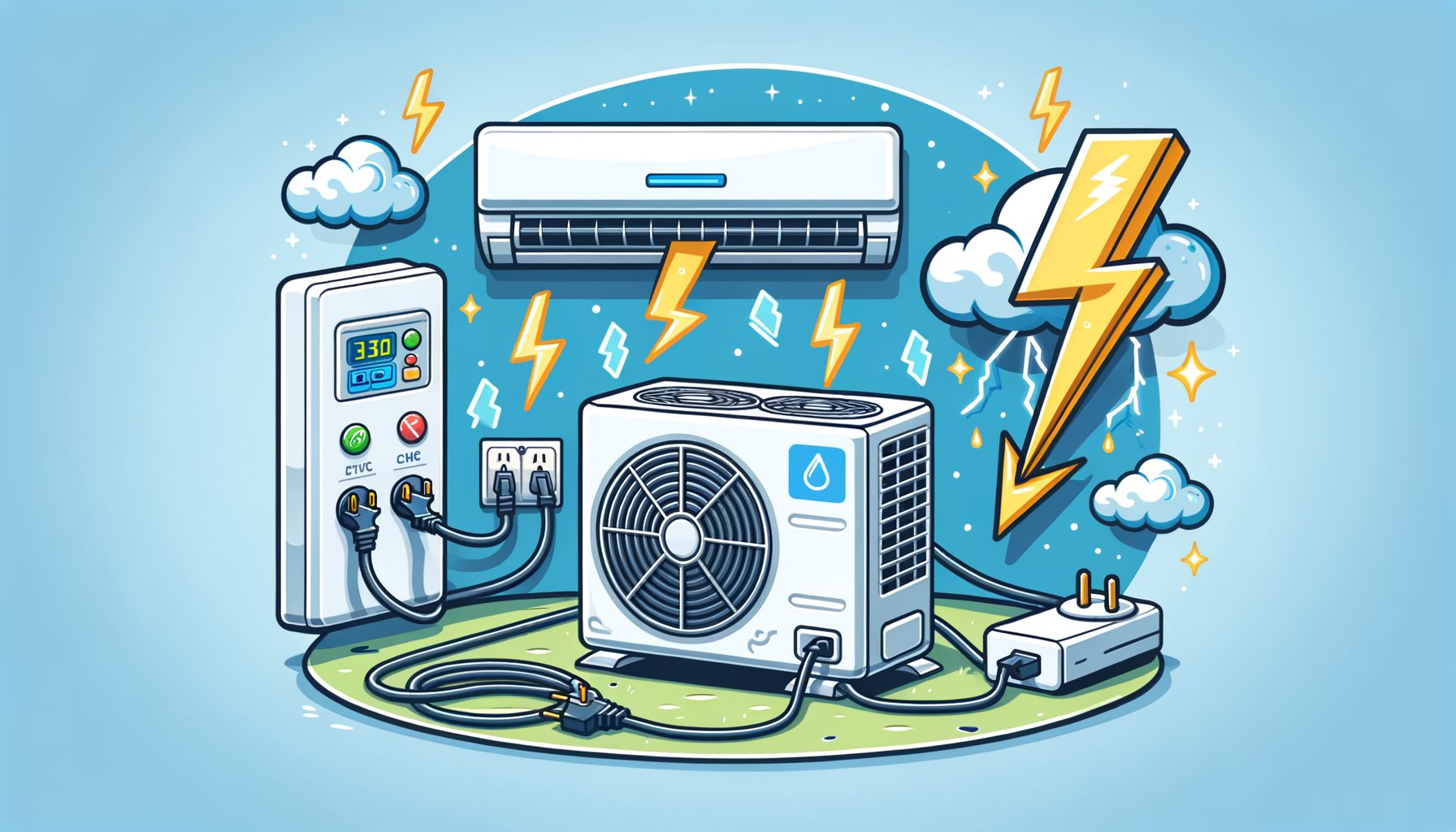
Protecting your air conditioner from power surges isn’t just “nice-to-have”—it’s one of the least expensive ways to dodge a four-figure repair. Sudden voltage spikes from lightning, grid switching, or an unstable supply can fry delicate control boards and strain the compressor, turning a hot day into an emergency. In the pages below, you’ll learn how surge protection works, which devices actually shield your HVAC, and practical steps to keep your system safe without wasting money. Ever lost power during a storm or watched lights flicker when heavy appliances kick on? Treat this as your wake-up call—and your playbook.
Why Power Surges Threaten Your AC (And Your Wallet)
Few appliances are as exposed to surges as air conditioners: high-power motors meet sensitive electronics in one package. In modern systems—especially inverter-driven units—microprocessors, variable-speed drives, and sensors orchestrate the compressor and fans. Those components are fast and efficient, yet they dislike transient voltage spikes. A surge lasting microseconds can punch through semiconductor junctions, degrade insulation, or latch up a control board. Even when the unit “survives,” repeated small surges speed up aging, causing nuisance error codes, short cycling, and early failure.
Where do surges come from? The obvious culprits are lightning and utility events like switching and grid faults. While a direct strike is rare, nearby lightning creates strong electromagnetic fields and induced surges that ride utility lines into homes. Utilities reconfigure feeders and restore power after outages, which can create momentary overvoltage. What’s interesting too: “internal” surges—transients generated by devices inside your home when motors start or stop—are common. Refrigerators, vacuum cleaners, well pumps, even treadmill motors can launch spikes that propagate across circuits. Industry guidance from NIST and IEEE notes that many everyday surges originate inside buildings, not only from outside, which is why a layered approach is recommended.
What actually gets damaged? The usual casualties are the control board and the compressor. A main control board replacement often runs a few hundred dollars to $800+ depending on brand. A damaged compressor is a bigger hit: replacement typically costs $1,200–$2,500 or more with labor, and in older systems a full unit swap may be smarter long-term. One ugly night of storms can wipe out your summer budget. Meanwhile, a properly selected surge protective device (SPD) for the HVAC circuit plus a whole-home SPD at the main panel often costs less than a routine maintenance contract. The math is simple: cut risk now, avoid downtime later.
Choosing the Right Surge Protection for Air Conditioners
Not all surge protectors are created equal, and common “power strips” won’t help an outdoor condenser or a hardwired indoor air handler. Think in two layers to protect an AC. First, install a whole-home (service-level) SPD at the main electrical panel to clamp most incoming surges from outside. Second, add a dedicated HVAC SPD at the AC disconnect or subpanel feeding the condenser and air handler. Residual spikes, internal transients, and line-to-line or line-to-ground events are handled right where your equipment connects.
Which specs matter? Seek a UL 1449 4th Edition listing (Type 1 or Type 2, depending on installation point) with protection modes L–N, L–G, and N–G. Robustness is indicated by a higher nominal discharge current rating (In) and an adequate short-circuit current rating (SCCR). Many consumer listings emphasize “joule rating,” but for UL 1449 4th Edition SPDs, performance is better reflected by voltage protection ratings (VPR) and test currents than by joules alone. A lower VPR means less let-through voltage to your equipment. Visual status LEDs, audible alarms, and replaceable modules are practical features. In regions with frequent brownouts or unstable grids, pairing surge protection with an automatic voltage regulator (AVR) or line conditioner helps with undervoltage and overvoltage swings that SPDs themselves don’t correct.
Inverter ACs warrant special attention. They vary compressor speed to match demand, saving energy but relying heavily on power electronics. A clean, stable supply extends the life of the drive and control board. If your unit integrates with a smart thermostat, include that device in the plan with SPDs or low-voltage protection as appropriate (thermostats often draw power from a 24V transformer, which can still pass along surges if not protected upstream).
Well, here it is: a quick snapshot of common solutions and how they fit together.
| Solution | Where It Goes | Typical Rating/Standard | Protects | Approx. Cost (USD) | Best For |
|---|---|---|---|---|---|
| Whole-Home SPD | Main service panel (Type 1/2) | UL 1449 4th, VPR ≤ 700–1200V | All circuits from utility surges | 150–500 + install | Baseline protection for entire home |
| HVAC-Specific SPD | Outdoor disconnect or subpanel | UL 1449 4th, L–N/L–G/N–G modes | Condenser, heat pump, air handler | 80–300 + install | Targeted AC defense and residual surge clamping |
| Automatic Voltage Regulator (AVR) | Upstream of AC (select models support HVAC) | Voltage correction ±10–20% | Undervoltage/overvoltage | 200–800 + install | Unstable grids, frequent brownouts |
| Delay-On-Make Timer | Thermostat/low-voltage control line | 3–5 minute restart delay | Short cycling after outages | 15–60 | Protects compressor from rapid restarts |
The bottom line? Pair a quality whole-home SPD with an HVAC-specific SPD at the disconnect, then consider an AVR and a restart delay if your area has frequent sags and blips. Verify compatibility with your system and local code, and use a licensed electrician for installation.
Installation, Grounding, and Smart Operation
Even first-rate surge protection can fail if installed poorly. Three principles guide a good install: short leads, solid bonding/grounding, and correct location. Leads should be kept short to minimize inductance, which otherwise increases the voltage that “leaks” past the SPD during a surge. Ask your electrician to keep conductors as short and straight as possible—ideally under about 6 inches for branch-level SPDs—and to twist paired conductors where allowed to reduce inductance further. Mounting the SPD at the outdoor disconnect for the condenser minimizes distance to the load.
Bonding and grounding matter just as much. Surge energy is diverted by the SPD into the grounding system, so a weak ground undermines protection. Your service ground electrode system (ground rods, Ufer ground, or water pipe bond where allowed) should be intact and code-compliant. The neutral-to-ground bond belongs at the service disconnect only (per NEC in the U.S.), not downstream. Performance is reduced by corroded lugs, loose bonds, or undersized conductors. If your home has been remodeled or the panel is older, have a professional verify grounding and bonding during the SPD job.
Location plays a role too. A whole-home SPD typically lands on a dedicated two-pole breaker near the main disconnect (or is service-entrance rated and installed accordingly). The HVAC SPD is placed at the AC disconnect or in the subpanel feeding the condenser, connected across the line conductors and to ground per the manufacturer’s instructions. Follow labeling exactly; mixing up L–N–G leads can negate protection. Many SPDs include indicator lights—green means operational; if the light is out or red, the module has likely sacrificed itself and needs replacement.
Smart operation eases stress on equipment. A delay-on-make timer prevents rapid compressor restarts after short outages or thermostat blips. Set a 3–5 minute delay to allow refrigerant pressures to equalize. During storms, consider setting the thermostat slightly lower in advance to pre-cool the home in case of a brief outage, and avoid adjusting settings while the grid is unstable. Keep the area around the outdoor unit clear; debris and restricted airflow raise current draw and heat, making the compressor more vulnerable when power fluctuates. Lastly, schedule professional maintenance—pitted contactors and weak capacitors amplify surge damage and are often caught early.
Maintenance, Monitoring, and Insurance: Keeping Protection Working
Surge protection isn’t a buy-once-and-forget item. SPDs wear out gradually as they absorb energy, and a large hit can end their protective life instantly. Then this: make a habit of checking status lights after storms and during seasonal HVAC filter changes. If the indicator shows failure or an audible alarm sounds, replace the module immediately. Keep documentation of install dates, model numbers, and any event counters (some premium SPDs track hits). For renters or multi-unit buildings, coordinate with property management so the whole-home SPD at the main service is also maintained.
How long do SPDs last? It depends on surge environment and device quality. In mild environments, a well-made unit can last many years. In lightning-prone regions or where utility events are frequent, life may be shorter. If you’ve had a known major surge (for example, a nearby lightning strike that tripped breakers), inspect the AC, check SPD status, and consider preemptive replacement if the manufacturer recommends it after severe events.
Protection often pays for itself. Consider a simple scenario: a quality whole-home SPD ($300 installed) plus an HVAC SPD ($250 installed) totals around $550. A single control board failure may cost $400–$900 installed; a compressor replacement $1,200–$2,500+. Avoiding just one failure over ten years covers the investment—and other electronics in your home are shielded too. Some utilities offer meter-based surge plans for a monthly fee; read the fine print on coverage limits and whether internal surges are included. Homeowners insurance sometimes covers lightning damage but may exclude electronics or depreciate older equipment; deductibles can wipe out the benefit for smaller repairs. Manufacturer warranties often exclude surge damage entirely, making proactive protection even more important.
Document everything to make claims easier. Keep receipts, photos of installation, and any utility or weather reports of notable events. If a claim is ever needed—insurance, utility surge program, or an SPD manufacturer’s connected equipment warranty—good documentation speeds resolution. A few minutes of record-keeping now can save days of back-and-forth later.
Q&A: Common Questions About AC Surge Protection
Do I still need a whole-home SPD if I install an HVAC surge protector? Yes. A whole-home SPD knocks down large incoming surges on all circuits, while the HVAC SPD handles residual and locally generated transients right at the equipment. Together they deliver layered defense.
Will a plug-in power strip protect my outdoor AC unit? No. Outdoor condensers and many air handlers are hardwired and run on 240V circuits, not plug-in receptacles. You need a UL 1449 Type 1 or Type 2 SPD installed at the panel or disconnect by a qualified electrician.
What size or rating should I choose? Choose a UL 1449 4th Edition-listed device, the correct voltage (e.g., 120/240V split-phase in North America), protection modes L–N, L–G, N–G, and a low VPR. For the service-level SPD, pick a device with sufficient SCCR and nominal discharge current (In) for your service size. When in doubt, consult your electrician and the AC manufacturer’s guidance.
Are voltage stabilizers worth it? If your area has frequent brownouts, an AVR can help by correcting low or high voltage that SPDs don’t fix. Select a model rated for HVAC loads and confirm compatibility; some AVRs are for electronics only. Pairing AVR + SPDs provides both conditioning and surge clamping.
Conclusion: Protect Your Cooling, Your Comfort, and Your Budget
Here’s the core takeaway: your air conditioner faces two enemies—surges from outside and spikes from inside. The fix is straightforward and affordable. A whole-home SPD at the main panel shields every circuit from incoming transients. An HVAC-specific SPD at the disconnect cleans up the remaining noise and local spikes that threaten your compressor and control boards. Add a delay-on-make timer to stop rapid restarts after outages, and consider an AVR if your grid voltage is unstable. Back it up with solid grounding, tidy installation with short leads, and quick status checks after storms. That’s a professional, layered defense that can pay for itself the first time it prevents a service call.
Act while the weather is calm: schedule a licensed electrician to install a UL 1449-listed whole-home SPD and an HVAC SPD, verify your grounding and bonding, and add a restart delay if you don’t already have one. If you live in a high-risk area for lightning or brownouts, ask about an AVR option that’s compatible with your system. Take five minutes today to note your AC model number and breaker size, snap photos of your panel and disconnect, and get a quote—you’ll likely find the upgrade is straightforward.
Your comfort matters, and your gear deserves protection. With a small investment and a few smart choices, you can keep cool air flowing when the grid misbehaves and storms roll through. Ready to harden your home? Start your surge protection checklist, book the install, and enjoy the peace of mind that comes from knowing your AC is guarded. What’s the first step you’ll take this week to make your system more resilient?
Helpful Resources and Outbound Links:
– NIST Guide to Surge Protective Devices for Consumers: https://www.nist.gov/system/files/documents/2020/05/07/surge_protectors_guide.pdf
– U.S. Department of Energy – Air Conditioning and Ventilation Basics: https://www.energy.gov/energysaver/central-air-conditioning
– UL 1449 Surge Protective Devices Overview: https://www.ul.com/resources/ul-1449-standard-surge-protective-devices
– NFPA (NEC) Information for Homeowners: https://www.nfpa.org/Public-Education
– ENERGY STAR HVAC Guidance: https://www.energystar.gov/products/heating_cooling
Sources:
– National Institute of Standards and Technology (NIST), Surge Protective Devices Guide for Consumers
– Underwriters Laboratories (UL) 1449, Standard for Surge Protective Devices
– U.S. Department of Energy, Energy Saver – Central Air Conditioning
– IEEE and industry best practices on surge protection and grounding
– Typical contractor pricing and manufacturer service data for HVAC components (boards, compressors) aggregated from U.S. market estimates