
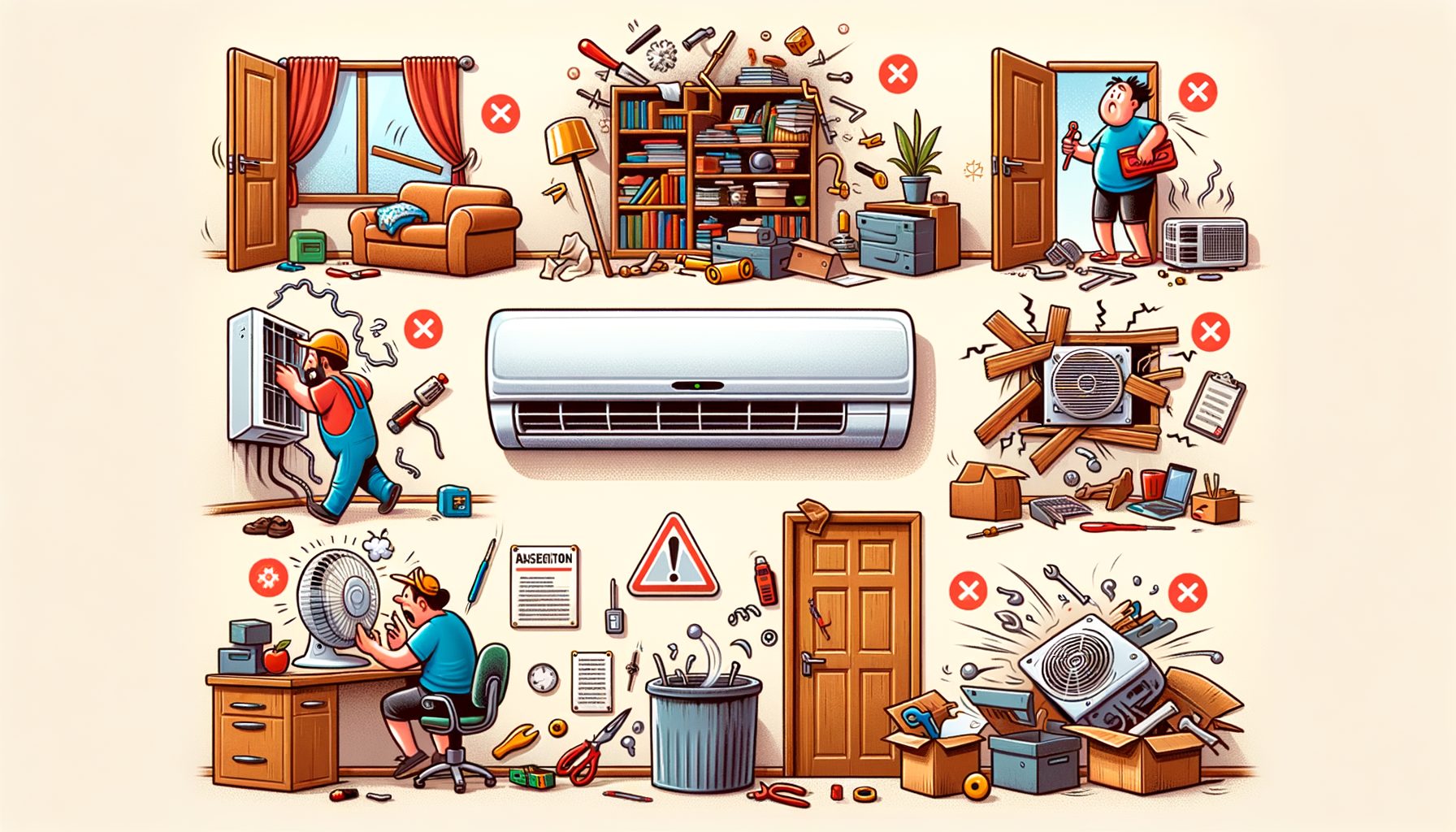
It’s tempting to assume the air conditioner will spring to life the moment you tap the thermostat. Yet many homes hide quiet problems that inflate bills and wear out equipment early. The bigger culprit: common AC mistakes. Everyday habits end up straining components, wasting energy, and cutting service life short. Result? Warmer rooms, surprise repair costs, and midsummer stress. The upside is real: a few simple changes can protect your system, restore comfort, and save money—fast. Ahead, you’ll see which behaviors hurt your AC, why they matter, and the exact steps to avoid them.
Dirty Filters and Blocked Airflow: The Hidden AC Killer
Clogged air filters and blocked vents rank among the most common AC mistakes—and the easiest to fix. Steady airflow is nonnegotiable for proper cooling. When the filter is packed with dust, pet hair, and pollen, the blower is forced to work harder, coils can freeze, and the compressor may overheat. Comfort falls while costs climb. The U.S. Department of Energy reports that routinely replacing filters can cut AC energy use by roughly 5–15%. Over a long summer, that can add up to about a month of cooling costs saved. See guidance at the DOE’s homeowner page: Maintaining Your Air Conditioner.
What to do: check your filter every 30 days during heavy use. Swap it every 1–3 months—sooner if you have pets, allergies, or nearby dust or construction. Pick a filter with a MERV rating your system supports; most homes do well with MERV 8–12. If the filter looks bowed, gray, or you can’t see light through it, it’s time. Also, walk your rooms and open all supply registers. Closing vents doesn’t save energy; it upsets pressure, boosts duct leakage, and can ice the coil. Keep return grilles free of furniture and curtains so the system can breathe.
Pro tip: write the replacement date on the filter edge, set a phone reminder, or subscribe to deliveries. Renters should ask the landlord who handles filter changes. A sudden whistle from the indoor unit often points to a clogged or overly restrictive filter for the blower’s speed setting.
Well, here it is: key impacts and quick fixes at a glance.
| Mistake | What Happens | Extra Energy/Cost | Easy Fix |
|---|---|---|---|
| Dirty air filter | Low airflow, coil icing, compressor stress | 5–15% more energy use | Replace every 1–3 months |
| Closed/blocked vents | High static pressure, duct leaks, uneven rooms | Up to 10% comfort loss, more wear | Open vents, clear returns, balance rooms |
| High-MERV filter on weak blower | Whistling, reduced capacity | Short cycling, parts wear | Use manufacturer-approved MERV rating |
Seeing rapid starts and stops, weak performance, or frost on the indoor lines? Start with airflow. Restoring clean, steady air is often the fastest way to recover efficiency and prevent damage.
Skipping Professional Maintenance: Small Savings, Big Repairs
Assuming “no news is good news” is a common trap. Skip seasonal maintenance and small issues begin to stack up. Dust on the outdoor condenser coil acts like a blanket, forcing longer run times for the same cooling. Over time, energy use can rise by double digits and compressor life can be shortened. Electrical connections may loosen from vibration. Condensate drains clog, leading to water leaks and mold. Even a mild refrigerant undercharge—or overcharge—can trim efficiency and harm the compressor.
What a professional tune-up includes: verification of refrigerant charge to manufacturer specs; measurements of superheat and subcooling; cleaning of the outdoor coil; rinsing or replacing the indoor filter (if accessible); testing capacitors, contactors, and motors; calibration of thermostat operation; a temperature-drop check; clearing the condensate drain; and an assessment of duct static pressure. A visit often costs less than a single emergency service call, which can be several times higher. ENERGY STAR’s guidance on routine HVAC care is a helpful reference: ENERGY STAR: Heating & Cooling.
Timing matters: book maintenance once a year, ideally in spring before the first heat wave. In dusty or coastal areas, consider a twice-yearly check. Keeping up with required maintenance on a new unit helps preserve the warranty. Hear buzzing, see tripped breakers, or notice oily residue on refrigerant lines? Don’t ignore it—call a licensed technician.
Costs in context: a routine tune-up might be $100–200; a compressor swap can run $1,200–3,000 or more, plus days without cooling. Preventive care functions like insurance for comfort. It also keeps real-world efficiency closer to the lab rating on the nameplate, so you actually capture the seasonal savings you paid for.
Thermostat Habits That Stress Your System (and Your Wallet)
Thermostats are powerful, but the way they’re used can quietly hurt the AC. The first misstep is setting extremely low temperatures to “cool faster.” What’s interesting too, air conditioners cool at a fairly constant rate; a 18°C (64°F) setting won’t speed things up—it just forces longer run times and can create humidity issues. Rapid on/off cycling is another problem. Flipping the system or setpoint constantly causes short cycles, heavy motor wear, and weak dehumidification, leaving the home clammy and the bill higher.
Smart settings: when you’re home, aim for 24–26°C (75–78°F) and use ceiling fans to feel 2–3°C cooler at a lower cost. When away, raise the setpoint by 3–6°C (5–10°F) rather than shutting the system off. The U.S. Department of Energy estimates that setting back 7–10°F (about 4–6°C) for 8 hours a day can save up to 10% per year on heating and cooling. See DOE thermostat guidance: Energy Saver: Thermostats.
Use Auto vs. On wisely: set the fan to “Auto” in most homes. “On” runs the blower nonstop; moisture can be pulled off the coil and re-evaporated into the air, raising indoor humidity. It also adds fan energy use and loads the filter faster. If you want extra filtration or air mixing, use short fan schedules or circulate mode.
Leverage technology: a modern programmable or smart thermostat smooths out swings. Program a steady schedule, enable geofencing so the home pre-cools before you arrive, and ramp setpoints gradually to avoid hard starts. Keep the thermostat away from sun, lamps, TVs, or supply vents so it reads the room accurately. If certain areas are always too hot or cold, ask a pro about zoning, balancing, or duct fixes instead of over-cooling the entire house.
Installation, Ducts, and Outdoor Unit Mistakes That Cut System Life
Even flawless habits can’t rescue a poor installation. A frequent error is choosing equipment that’s too big or too small. Oversized units drop air temperature quickly but don’t run long enough to remove humidity, which leads to sticky rooms, mold risk, and short cycling. Undersized units run constantly, driving up bills and accelerating wear. Proper sizing uses a Manual J load calculation—not a rule of thumb. Request it in writing from your contractor.
Ducts are just as important as the box. Leaky or undersized ductwork can waste 20–30% of cooling before it reaches rooms, making the AC run longer. If rooms never quite cool, dust is high, or airflow is noisy, have a pro test duct static pressure and leakage. Sealing with mastic (not tape that dries out) and adding insulation where needed can restore comfort and efficiency. ENERGY STAR has homeowner guidance here: Seal and Insulate.
Then this: outdoor unit placement and care. The condenser needs clear space to dump heat. Keep at least 60 cm (24 inches) of clearance on all sides and 1 m (3 feet) above. Trim shrubs, remove leaves, and avoid storing items nearby. Don’t wrap the unit while it’s running. If accessible, lightly rinse the coil with a garden hose from the inside out, but never use a pressure washer—fins can bend and capacity can drop. When in doubt, hire a technician to clean the coil properly.
Refrigerant is not a DIY project. In many countries, including the U.S., only certified technicians may handle it because of safety and environmental rules. Topping off without fixing leaks wastes refrigerant and, in some places, is illegal. Learn more from the U.S. EPA: EPA Section 608. A correct charge, confirmed by measurements, protects the compressor and helps the AC deliver the efficiency you paid for.
FAQ: Common AC Mistakes, Answered
Q: How often should I change my AC filter? A: Check monthly in summer and replace every 1–3 months based on dust, pets, and allergies. If it looks dirty or airflow feels weak, change it now rather than waiting.
Q: Does closing vents in unused rooms save energy? A: Usually no. It boosts duct pressure, can cause leaks, and may make other rooms less comfortable. Keep vents open and balance airflow instead.
Q: Can I hose off my outdoor unit? A: Yes—gently. Turn power off, remove large debris by hand, and rinse from the inside out with low pressure. Avoid pressure washers. If the coil is heavily clogged, call a pro for a deep clean.
Q: What temperature should I set in summer? A: Start at 24–26°C (75–78°F) when home and raise 3–6°C (5–10°F) when away. Use fans to feel cooler without overworking the AC.
Conclusion and Next Steps
In most cases, air conditioner failures don’t begin with a dramatic event. They start with common AC mistakes—dirty filters, skipped maintenance, thermostat habits that trigger short cycling, and installation or airflow issues that quietly drain efficiency. The pattern is predictable: airflow drops, components overheat, energy use rises, comfort declines. By spotting and fixing these simple errors, you protect the compressor, stabilize temperatures, and lower bills—often within a single billing cycle.
Action plan for this week—well, here it is: first, replace or wash your filter and open blocked vents. Second, go outside, clear 60 cm (24 inches) around the condenser, and gently rinse the coil if it’s dusty. Third, program your thermostat for steady setpoints—24–26°C (75–78°F) at home, higher when away—and set the fan to Auto. Fourth, schedule a professional tune-up if it’s been more than a year; ask for coil cleaning, refrigerant verification, static pressure measurement, and a written report. Fifth, if you suspect sizing or duct problems, request a Manual J load calculation and a duct leakage test instead of buying a bigger unit.
These steps are simple, low-cost, and proven. Expect a quieter AC, more even rooms, and more predictable bills. Longer equipment life is a bonus, delaying big purchases and keeping warranties strong. Renters can share this checklist with a property manager; it improves comfort and the building’s bottom line.
Start now: set a reminder to check your filter next month and book your seasonal maintenance today. Your future self—with a cooler home and a lower bill—will thank you. Small fixes done consistently beat expensive fixes done late. Ready to breathe easier this summer? Which quick win will you tackle first—filter, thermostat, or outdoor unit?
Sources
U.S. Department of Energy – Maintaining Your Air Conditioner: https://www.energy.gov/energysaver/maintaining-your-air-conditioner
ENERGY STAR – Heating & Cooling: https://www.energystar.gov/campaign/heating_cooling
U.S. Department of Energy – Thermostats: https://www.energy.gov/energysaver/thermostats
ENERGY STAR – Seal and Insulate: https://www.energystar.gov/campaign/seal_insulate
U.S. EPA – Section 608 Refrigerant Management: https://www.epa.gov/section608