
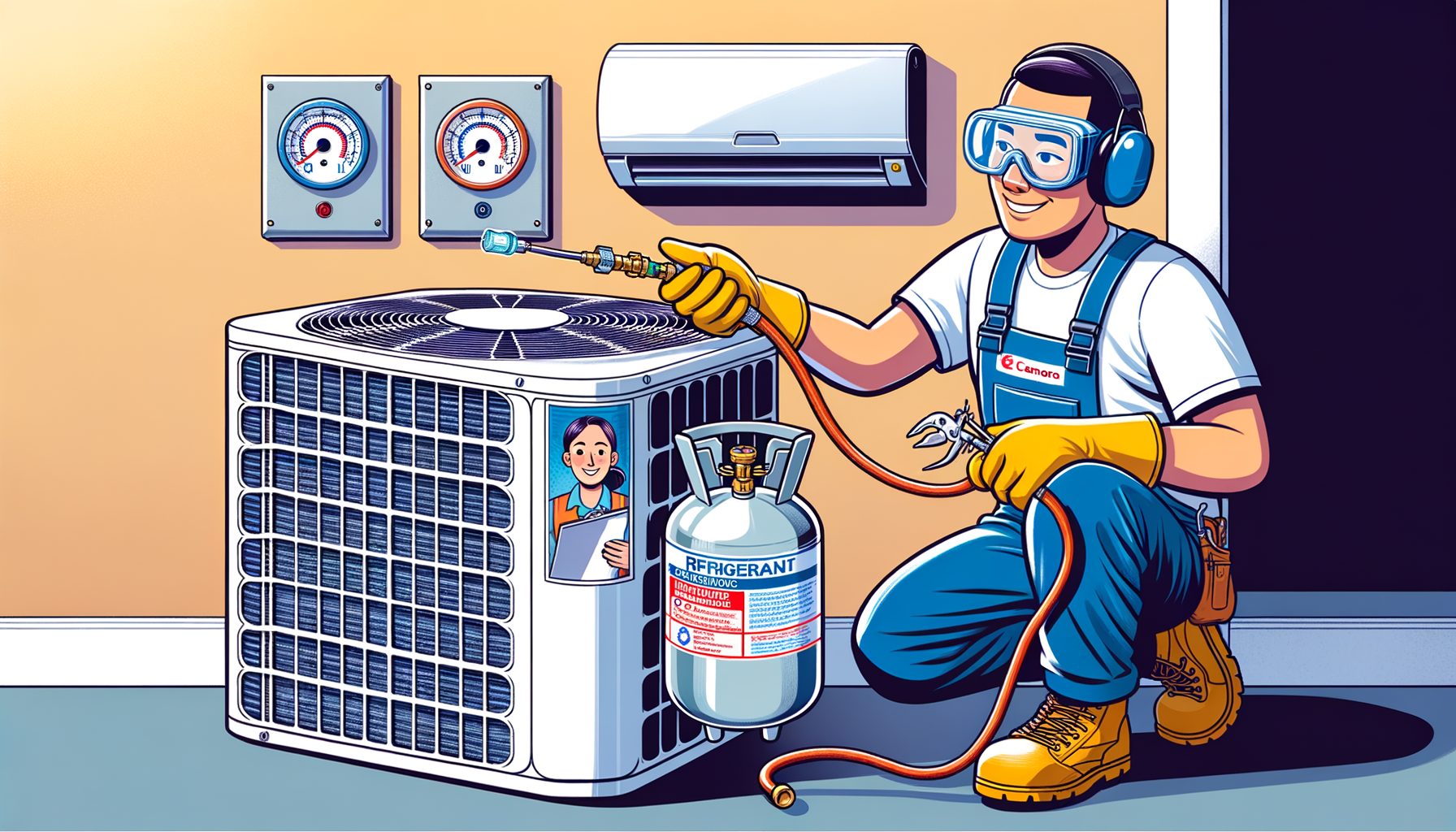
AC not cooling like it used to? Many homeowners immediately wonder, “Do I need a refrigerant refill?” Fair question—especially in a heatwave. Here’s the twist: in a healthy, sealed loop, refrigerant isn’t a consumable. If you keep topping off, a leak or deeper performance issue is usually lurking. In this guide, you’ll learn how rarely refills should happen, how to recognize genuine low-refrigerant symptoms, which repairs actually solve the problem, and how to handle everything safely and legally—less guesswork, fewer surprises, better comfort.
The real issue: AC refrigerant shouldn’t need frequent top-offs
Refrigerant moves through a sealed circuit. Heat is absorbed indoors, released outdoors, and the cycle repeats. Under normal conditions, charge levels remain steady for years. If someone says, “Just add a little Freon every summer,” take it with caution. Refrigerant doesn’t evaporate or wear out like fuel; when levels are low, the cause is almost always a leak, an installation error, or damaged parts. Topping off without fixing the source is like inflating a tire with a nail still in it—you’ll keep paying and never resolve the root problem.
Here’s why it matters. Low charge drives poor cooling, longer run times, higher bills, and potential compressor damage (the compressor is the heart of the system—and replacing it can rival the price of a new unit). Field data and industry guidance show that an incorrect charge can slash efficiency by 5–20%, depending on design and climate. That’s real money and real comfort lost—especially if you’re funding “top-offs” each season with no long-term fix.
What usually causes the drop? Pinhole leaks in copper lines, vibration-induced cracks, worn service valves, oil-stained indoor or outdoor coils, or a line set that wasn’t brazed correctly during install. In older R‑22 (HCFC‑22) systems, corrosion often plays the villain; with R‑410A or R‑32, mechanical stress or faulty installation is more common. The takeaway stays the same: the loop should be tight. If refrigerant has been added more than once over several years, it’s time for leak detection and a real repair—not another temporary boost.
Signs of a low‑refrigerant issue—and smart checks before you pay
Not every cooling complaint points to refrigerant. Before you schedule a refill, run a few quick checks. Start with airflow. A clogged filter, blocked return, or matted indoor coil can mimic low charge by starving the evaporator of warm air and leading to icing. Swap the filter, open supply and return vents, and gently clean visible dust on the indoor unit (power off first). Then this: step outside. If the condenser is packed with lint, leaves, or pet hair, rinse it from the inside out (again, power off). Restricted outdoor airflow spikes pressures and kills performance even when charge is perfect.
Low charge typically looks like this: warm or lukewarm air from vents; longer cycles that fail to hit the setpoint; ice on refrigerant lines or the indoor coil; hissing or bubbling at joints; and oily residue around fittings (oil travels with refrigerant, so stains often reveal leaks). If ice coats the large copper line near the outdoor unit, shut the system off and let it thaw before calling for service—running it frozen can harm the compressor.
Call a pro and expect more than “add a pound.” Proper diagnostics should include superheat and subcooling measurements, temperature split, airflow verification, and a leak search using electronic sniffers, UV dye, or a nitrogen pressure test. If a leak is found, best practice is to repair it, recover remaining refrigerant, evacuate to a deep vacuum (often to 500 microns), and weigh in the factory charge—not guess by pressures alone. Ask for documented readings and the exact amount added. Transparent numbers help you avoid repeat visits and ballooning costs.
How often to refill refrigerant: the honest timeline, costs, and when to repair or replace
Short version: in a tight system, refills should be rare to never. Many homes go 5–10+ years without adding refrigerant at all. If your unit needs frequent refills, a leak is present and must be fixed. Annual top-offs signal a systemic problem—not routine maintenance. In many regions, knowingly adding refrigerant to a leaking system without attempting repair is also illegal.
Costs and decisions hinge on refrigerant type and where the leak sits. R‑22 (common in pre‑2010 U.S. installs) has been phased out and is expensive, so repeated refills can quickly outstrip the value of a repair—or even a replacement. R‑410A remains common but is being phased down under new climate policies; newer systems are shifting to lower‑GWP options like R‑32 or R‑454B. No matter the refrigerant, the cheapest long‑term path is usually to fix the leak and charge correctly once.
The table below offers a directional guide. Prices vary by country, refrigerant availability, labor rates, and system size; treat these numbers as ballpark estimates.
| Scenario | What it means | Typical fix | Estimated cost (USD) |
|---|---|---|---|
| Minor leak at service valve | Slow refrigerant loss over months | Replace or reseal valve, evacuate, weigh in charge | $250–$700 + refrigerant ($50–$125/lb for R‑410A; R‑22 can be $100–$200+/lb) |
| Leaky indoor coil (evaporator) | Poor cooling, ice on coil | Coil replacement and system recharge | $800–$2,400 + refrigerant |
| Damaged line set | Oil stains along copper lines | Repair or replace line set, evacuate, recharge | $500–$1,500 + refrigerant |
| Annual “top-off” without repairs | Ongoing leak not addressed | Leak detection, repair, proper charge | $150–$500 leak search; skipping repair costs more over time |
When should you replace instead of repair? Consider replacement if your system uses R‑22, is 12–15+ years old, or needs a major component like a compressor. Modern high‑efficiency units often trim energy use noticeably, and avoiding repeat refills saves cash and hassle. Always weigh the repair quote against a replacement estimate and potential energy savings.
Refrigerant types, safety, and rules: what every homeowner should know
Refrigerants differ in performance, flammability, and climate impact. R‑22 (older systems) has ozone‑depleting potential and a high global warming potential (GWP). R‑410A (many current systems) avoids ozone harm but still carries a high GWP (~2088). What’s interesting too: lower‑GWP options like R‑32 (~675 GWP) and R‑454B (~466 GWP) are gaining ground globally. Many countries now require tighter controls on leak repair and refrigerant handling to protect the environment and improve efficiency.
In the United States, only EPA Section 608–certified technicians may purchase and handle most refrigerants, and intentional venting is illegal. The American Innovation and Manufacturing (AIM) Act is phasing down HFCs like R‑410A. Across the European Union and beyond, F‑gas rules require leak checks, recordkeeping, and refrigerant recovery at end of life. Internationally, the Kigali Amendment drives a global HFC phasedown. Well, here it is: the days of “just add a little gas” are over; responsible handling and precise charging are standard practice.
Safety deserves attention. Then this: some next‑gen refrigerants are mildly flammable (A2L), which demands specific tools, training, and ventilation practices. That’s another reason DIY refills are risky—and often illegal. The best role for homeowners is prevention: keep filters clean, maintain good airflow, schedule seasonal tune‑ups, and act early if you notice symptoms. When service is needed, ask pros to follow manufacturer charging methods (weigh‑in confirmed with superheat/subcooling), document readings, and provide a clear repair plan if a leak is found.
Useful references: learn about refrigerant rules from the U.S. EPA Section 608, F‑gas guidance from the European Commission, efficiency tips from ENERGY STAR, and equipment standards from AHRI.
FAQs: quick answers to the most common refrigerant refill questions
How often should I top off my AC refrigerant? Ideally, never. A properly installed, leak‑free system can run for many years without additional refrigerant. If a refill is needed more than once over several years, assume a leak and request leak detection and repair before a weighed recharge.
Can I add refrigerant myself? In many countries, purchasing or handling refrigerant without certification is illegal. It’s also risky: overcharging or undercharging can damage the compressor and void warranties. Hire a licensed HVAC technician to recover, evacuate, weigh in, and verify the charge correctly.
How do I know if my AC is low on refrigerant? Common clues include warm supply air, ice on the indoor coil or suction line, hissing sounds, oily residue near fittings, and longer cycles with weak cooling. Rule out airflow issues first (filter, vents, dirty coils). If symptoms remain, call a pro for diagnostics.
Is R‑22 still available? R‑22 is phased out in many markets and can be costly, typically sourced from recycled stock. If your system uses R‑22 and leaks, weigh the economics carefully—repeat refills may cost more than repairing or replacing with a modern, efficient unit using a lower‑GWP refrigerant.
What does a proper recharge include? After fixing leaks, a technician should recover remaining refrigerant, evacuate to a deep vacuum to remove air and moisture, weigh in the exact factory charge, and verify superheat/subcooling and temperature split. You should receive documented readings and details of any parts replaced.
Conclusion
Bottom line: frequent refrigerant refills shouldn’t be necessary. In a healthy, sealed system, refrigerant isn’t something you “use up.” If your AC seems to need a top‑off every season, you’re not doing maintenance—you’re facing a leak or another correctable issue. The smartest, most cost‑effective move is to fix the source, charge to the exact factory spec, and verify performance with real measurements. That approach protects the compressor, saves energy, and restores reliable comfort.
We covered the essentials: why sealed systems rarely need topping off, how to spot true low‑refrigerant symptoms, what a pro should check and repair, and how global rules shape your options. You also saw typical costs, when to repair versus replace, and how simple home maintenance—clean filters and coils—prevents many “low charge” look‑alikes.
If your AC is underperforming today, act now: check airflow, clear the outdoor unit, and schedule a licensed HVAC visit with leak detection and documented charging. Ask for numbers—superheat, subcooling, temperature split—and keep the report. If a major leak or an aging R‑22 system is draining your budget, compare a targeted repair with a modern replacement; in many homes, efficiency gains and reliability quickly justify the change.
Comfort should be effortless and affordable. With the right diagnosis and a one‑and‑done repair, you can ditch temporary fixes and get back to steady, efficient cooling. Ready to leave the endless top‑offs behind? Make the call, get the facts, and own your comfort. What’s the first sign you’ll watch for this season?
Sources
– U.S. EPA Section 608 Refrigerant Management: https://www.epa.gov/section608
– European Commission F‑gas Regulations: https://climate.ec.europa.eu/eu-action/fluorinated-greenhouse-gases_en
– ENERGY STAR HVAC Guidance: https://www.energystar.gov/
– AHRI (Air-Conditioning, Heating, and Refrigeration Institute): https://www.ahrinet.org/
– U.S. Department of Energy, Home Cooling Tips: https://www.energy.gov/energysaver/air-conditioning